
Areola Restoration After Gender-Affirming Chest Surgery
A multi-session restorative case following masculinizing chest surgery, restoring a natural nipple-areola appearance with dignity and care.
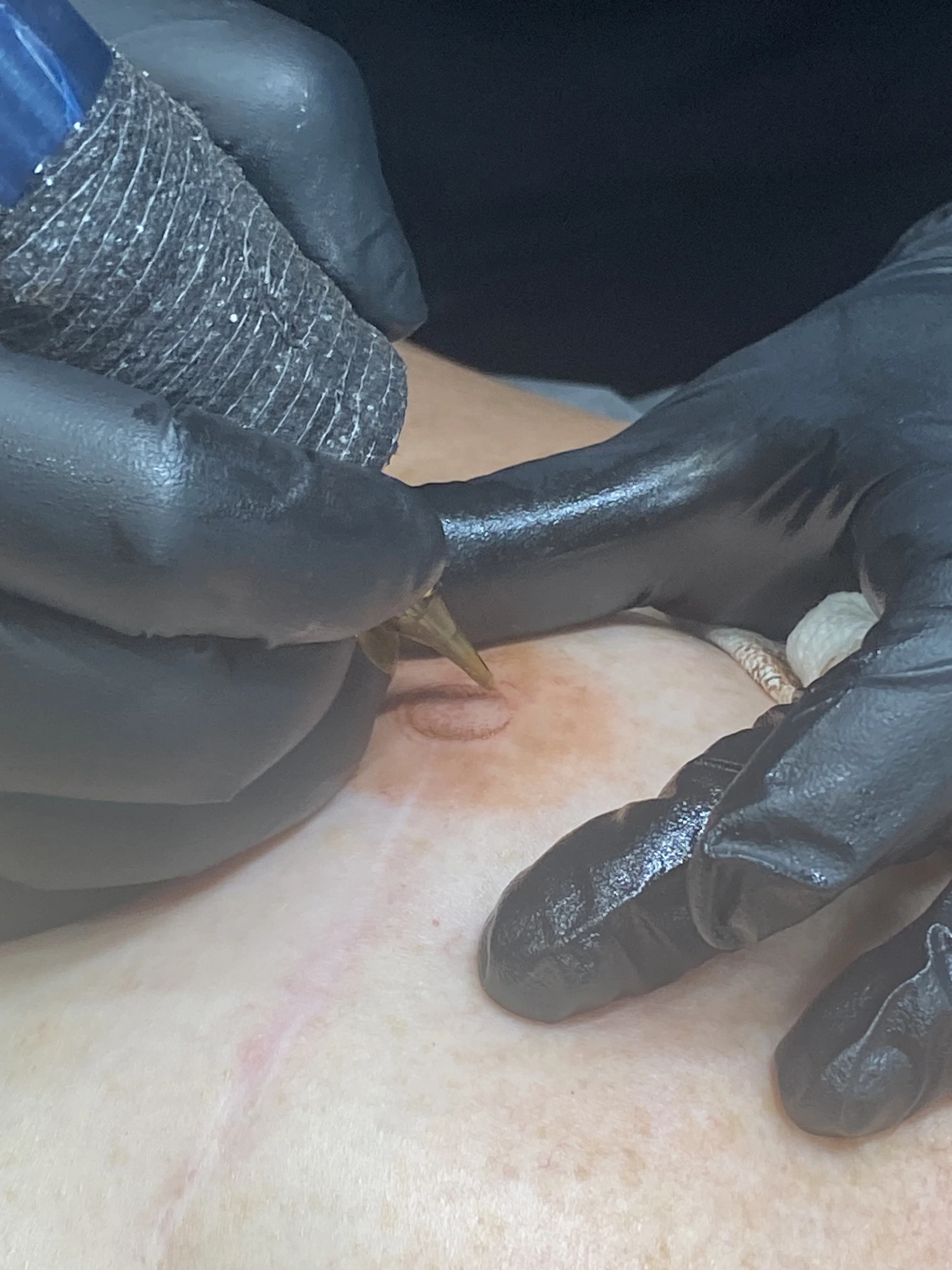
Restorative work often begins where surgery ends. This case documents, stage by stage, the restoration of the nipple-areola complex following gender-affirming (masculinizing) chest surgery, shared with the client's consent to show what paramedical micropigmentation truly involves.
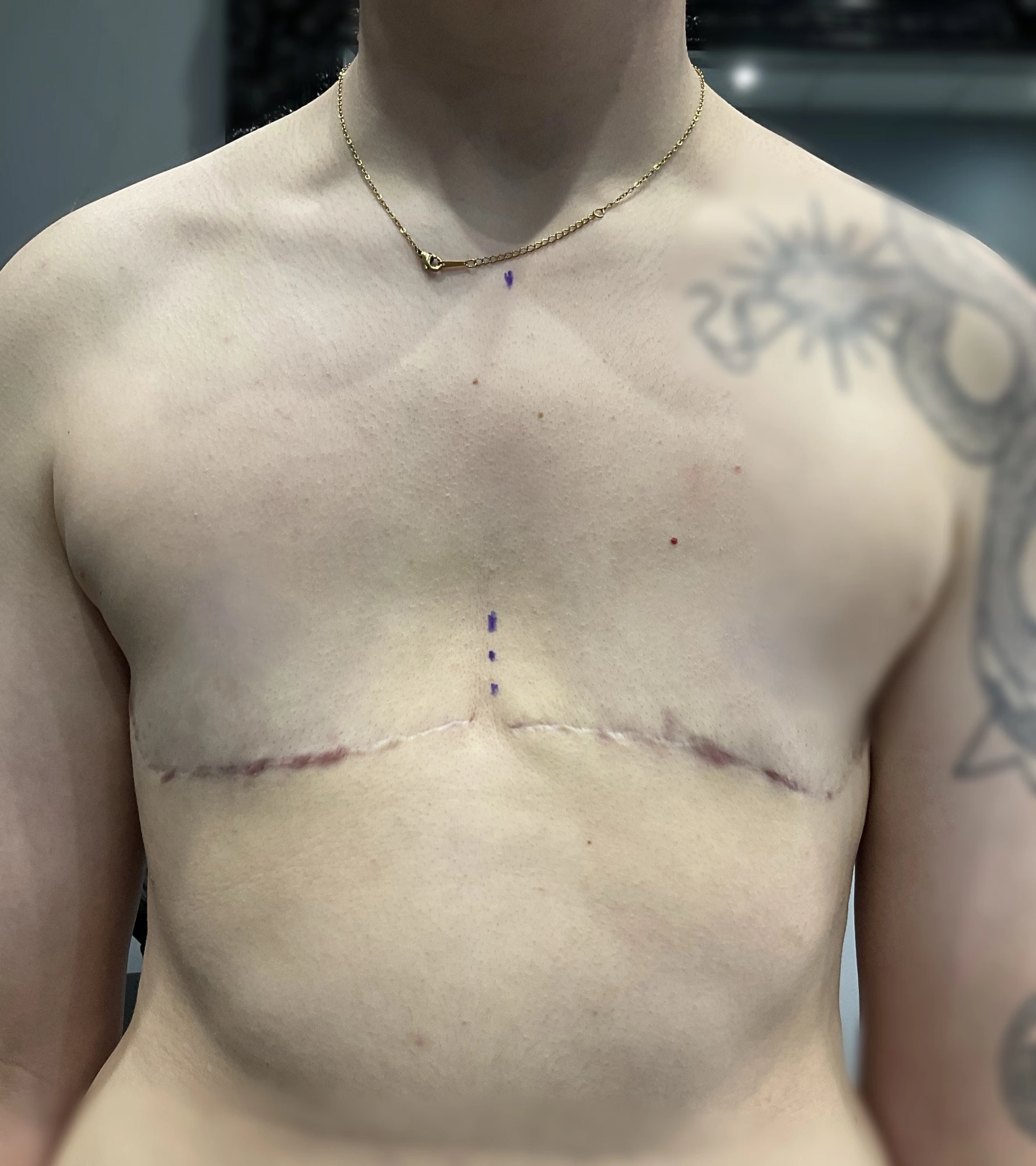
Before Procedure — Starting Point
The client has undergone gender-affirming top chest surgery and is now ready for the next stage of their restorative journey. This image documents the chest before paramedical micropigmentation and provides an important baseline for evaluating anatomy, scar placement, skin condition, symmetry, and the available tissue.
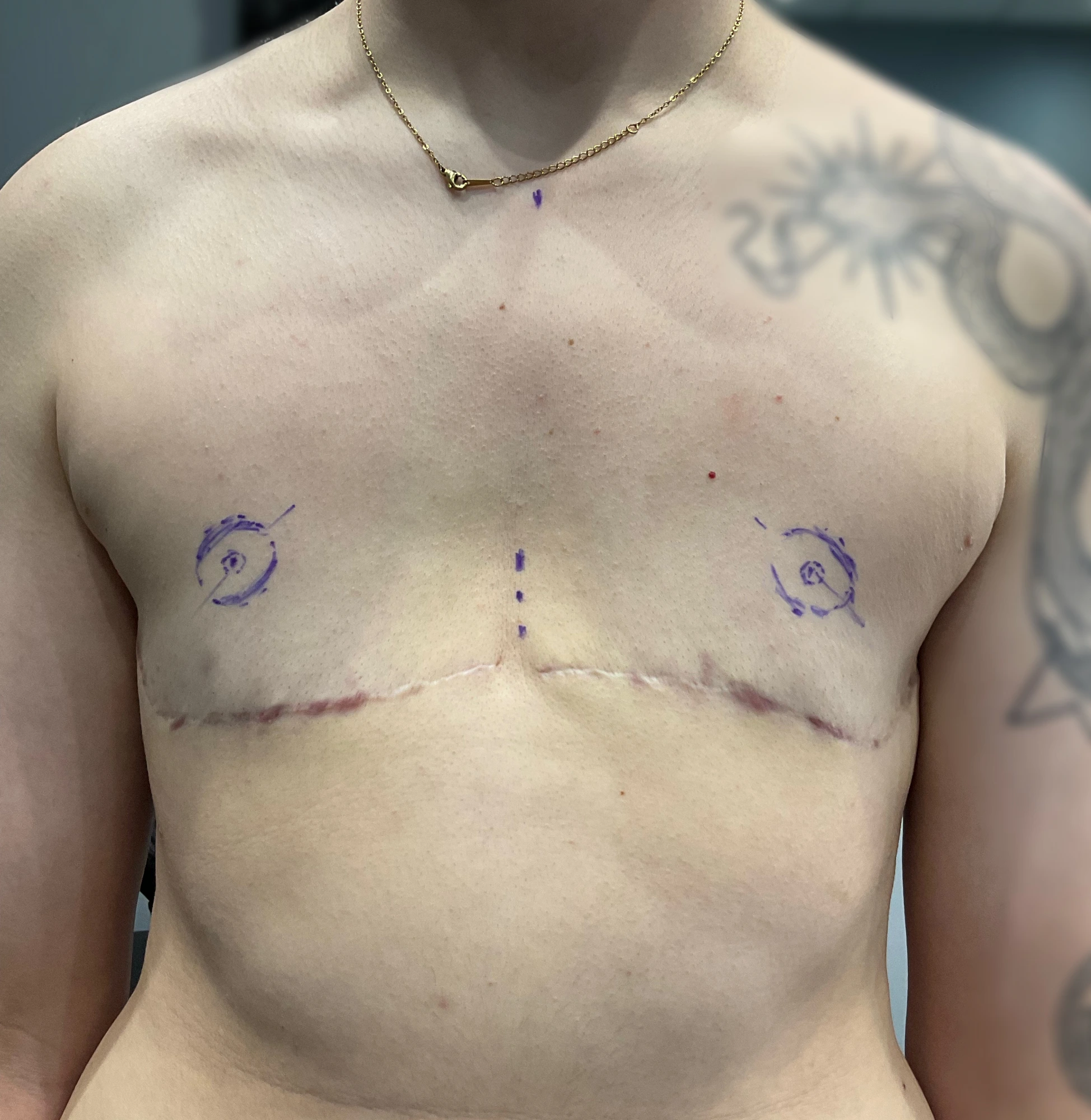
Mapping & Placement — Designing the Areola-Nipple Complex
Precision begins before pigment touches the skin. Detailed measurements and temporary surgical-style markings are used to determine the size, position, proportion, and symmetry of the new areola-nipple complexes. Placement is customized to the client's individual anatomy rather than relying on a standardized template.
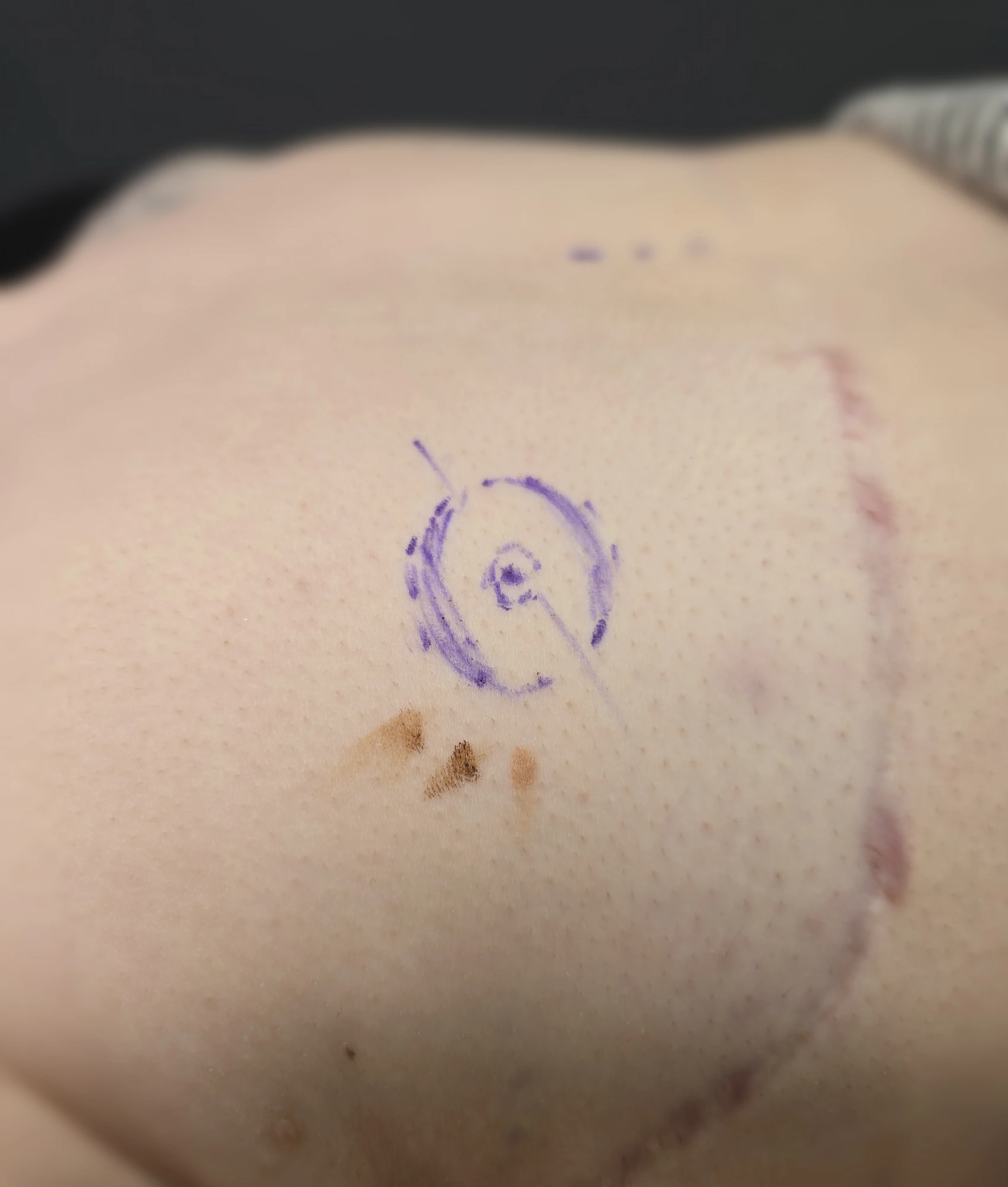
Color Analysis & Testing — Creating an Individualized Palette
Often the most challenging stage, color formulation requires careful observation of the client's natural pigmentation and undertones. The lips, upper eyelids, surrounding skin, and subtle variations throughout the complexion provide valuable color clues. Multiple pigments may be blended and tested to develop an individualized palette that will integrate naturally with the client's skin once healed.
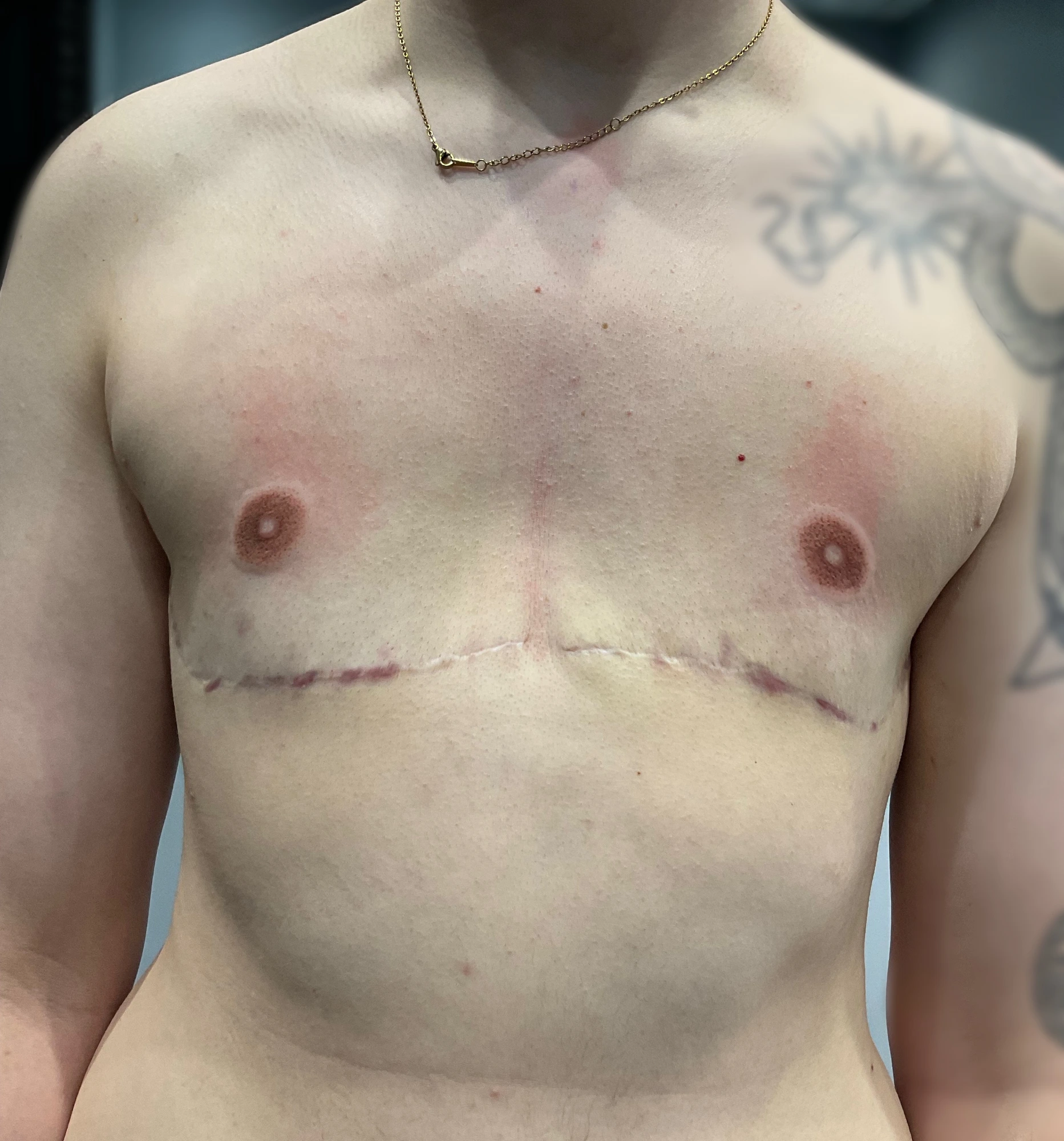
Immediately Post-Procedure — First Layer of Pigment
This image shows the areola complexes immediately following the initial pigment application. At this stage, the color may appear stronger, warmer, or more defined than the anticipated healed result. The first session establishes the foundation; the skin must now be allowed to heal and reveal how it accepts and retains the implanted pigment. The client returns in approximately three weeks for reassessment.

Three-Week Follow-Up — Refinement & Building Realism
At the follow-up appointment, the healed result is carefully assessed for color retention, tone, symmetry, and overall integration with the surrounding skin. Color can be adjusted where necessary before the finer anatomical details are developed. Subtle features such as Montgomery glands, tonal variations, highlights, texture, and shadow beneath the nipple help create depth and the optical illusion of projection. It is this deliberate layering of color, light, shadow, and imperfection that transforms pigmentation into a natural-looking 3D areola-nipple complex.

Final Results — After the Second Session
Following the second session, the restorative process is complete. Final refinements in color, dimension, texture, highlights, shadows, and anatomical details bring the areola-nipple complex to life. The finished result is designed to integrate naturally with the client's chest, creating realistic visual depth, balance, and symmetry. This final stage demonstrates how clinical knowledge, color theory, technical precision, and artistry come together to create an individualized and natural-looking result.
Shared with the informed consent of the individual pictured. Results vary by person, skin type, and healing.
See more of our work